SymbolismArt Works
Projects
- The Eternal Love
- The Big Family
- Heaven No.3
The Eternal Love
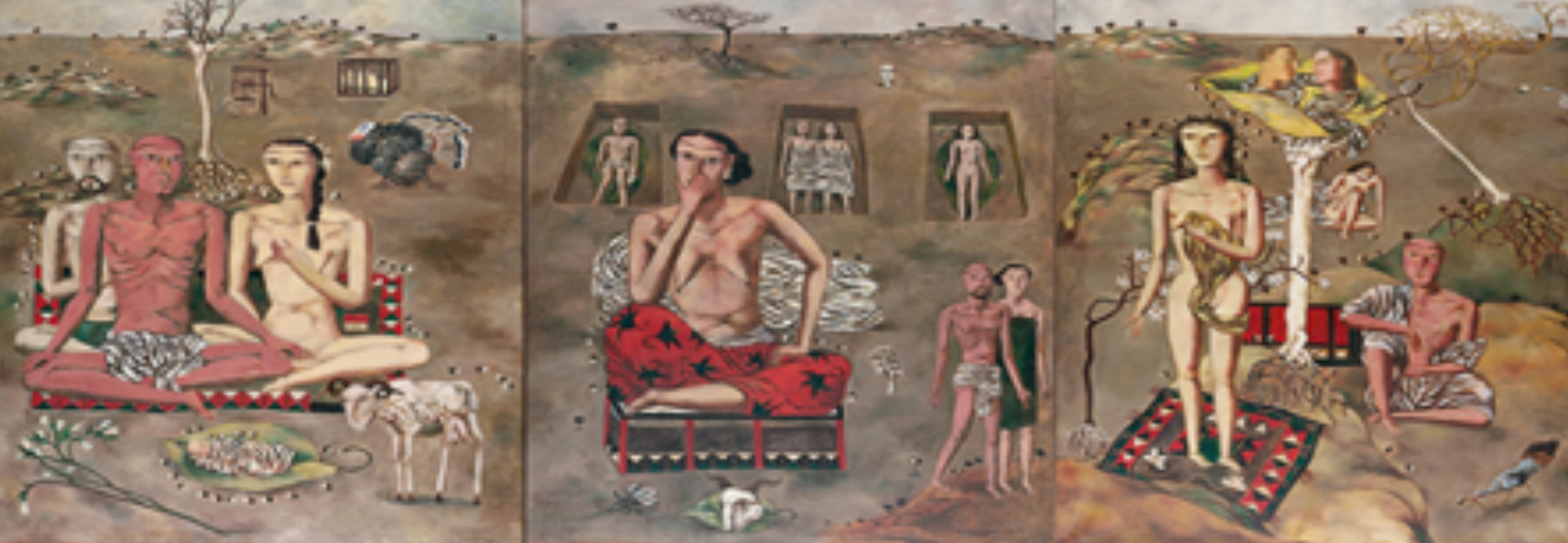
Most of Xiaogang's paintings have a deeper meaning that is directly related to Chinese culture and traditions. For example, the Eternal Love which he painted in 1988 the same year that he married his wife, Tang Lei. In this art, Xiao gang reflects on various issues, such as the conflicting emotions of love, uneasiness, and hope which are communicated, demonstrated and expressed in a way that resonates to the artistic freedoms enjoyed by artists in China and other parts of the world. This artwork depicts Xiao gang's life and his thoughts about the meaning of life, and he also represents the emotions of his partnership with the wife.
Additionally, despite keeping the open realism regarding the realities of life, this work also portrays an arid surrounding where there is little protection for his newly established family. There is also an exposed burial site and animals in the background. The faces of the people also portray uncertainty. Through this work, Xiao gang appears to be disclosing sociological issues which give rise to idealism as well as utopia. It is keynoting that these issues are depicted firmly and deeply in a restrained existence which is expounded by the understanding of mortality. This artwork paints the reality of the artist's life in a disengaged and melancholic way. The people in this art are represented in a manner that they are staring at the viewers or audience in a lost and nostalgic style; this indicates uncertainty, concern, and anxiety.
The Eternal Love
The Big Family
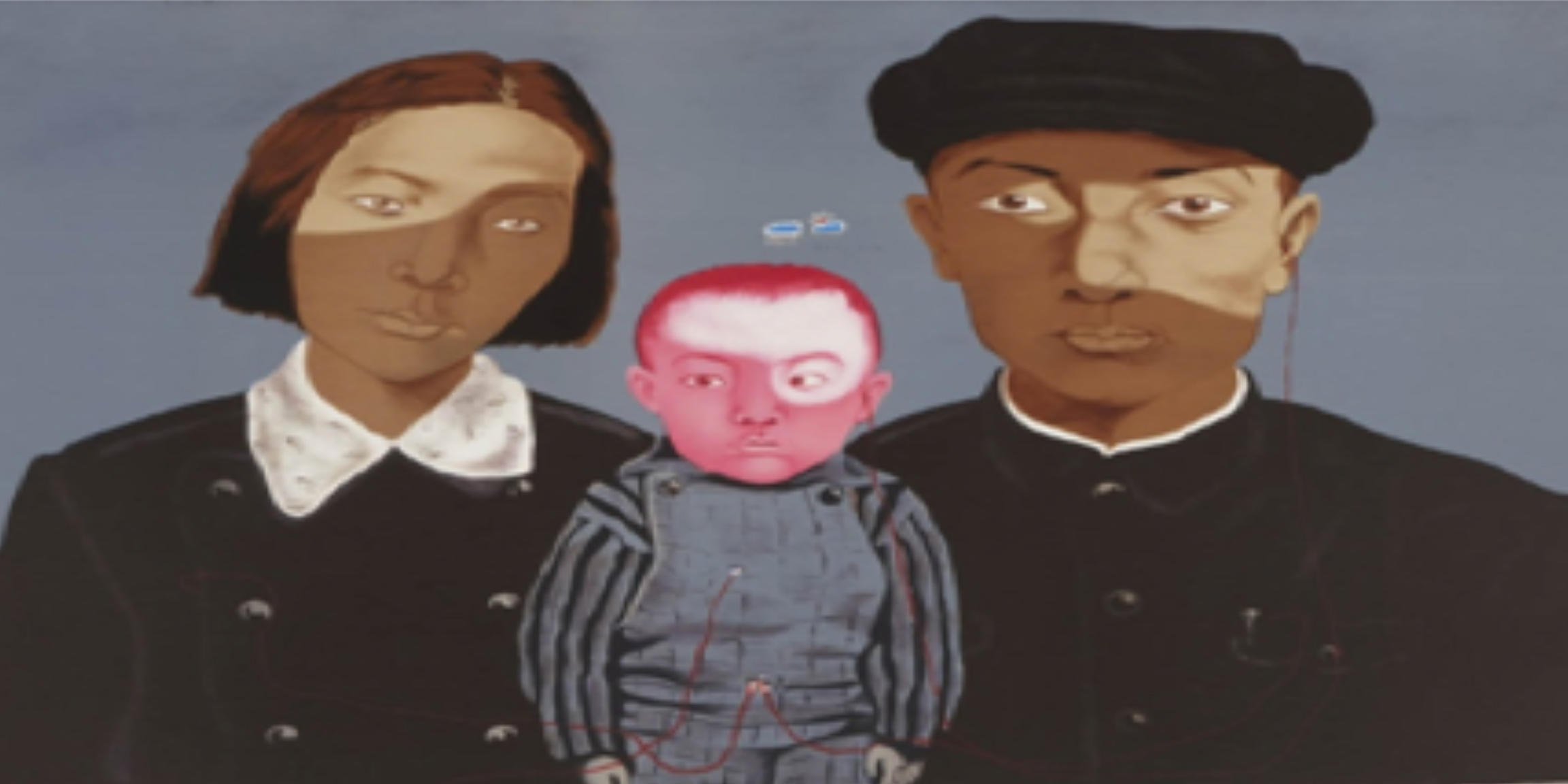
Xiao gang's Bloodlines series is also highly recognized for their distinctive features. In these paintings, he depicted parents and children gazing blankly out of a grey-toned background. Additionally, these artworks have red lines which run around the paintings and periodically a spot may be seen appearing like the art is wearing off. Xiao gang began producing the Bloodline series in the 1990s, and he continued painting them in the first decade of the twenty-first century. This distinctive style made his art stand out, and it also made him prominent in the art industry.
These series symbolized how family relationships were established and managed. Most notably, the government was directly involved in creating house policies, and these rules were only amended and adjusted in secrecy. Xiao gang used these works to address matters related to class, and they were illustrated in a social-realist style. The paintings were almost similar to each other; however, they were marks which acted as symbols of authenticity.
The Big Family is one of the artworks that Xiao gang produced in the early 21st century. In this painting, the red lines and the blemishes are visible across all the objects. Additionally, the people are represented with slightly bigger heads which distort the symmetry of the body; this symbolizes the thoughts and the unexpressed opinions among the family members. Furthermore, the tension which is seen in the individuals symbolically indicated the emotional distress in the people as they try to convey the struggles and difficulties of the social life in contemporary society.
The Big Family
Heaven No.3
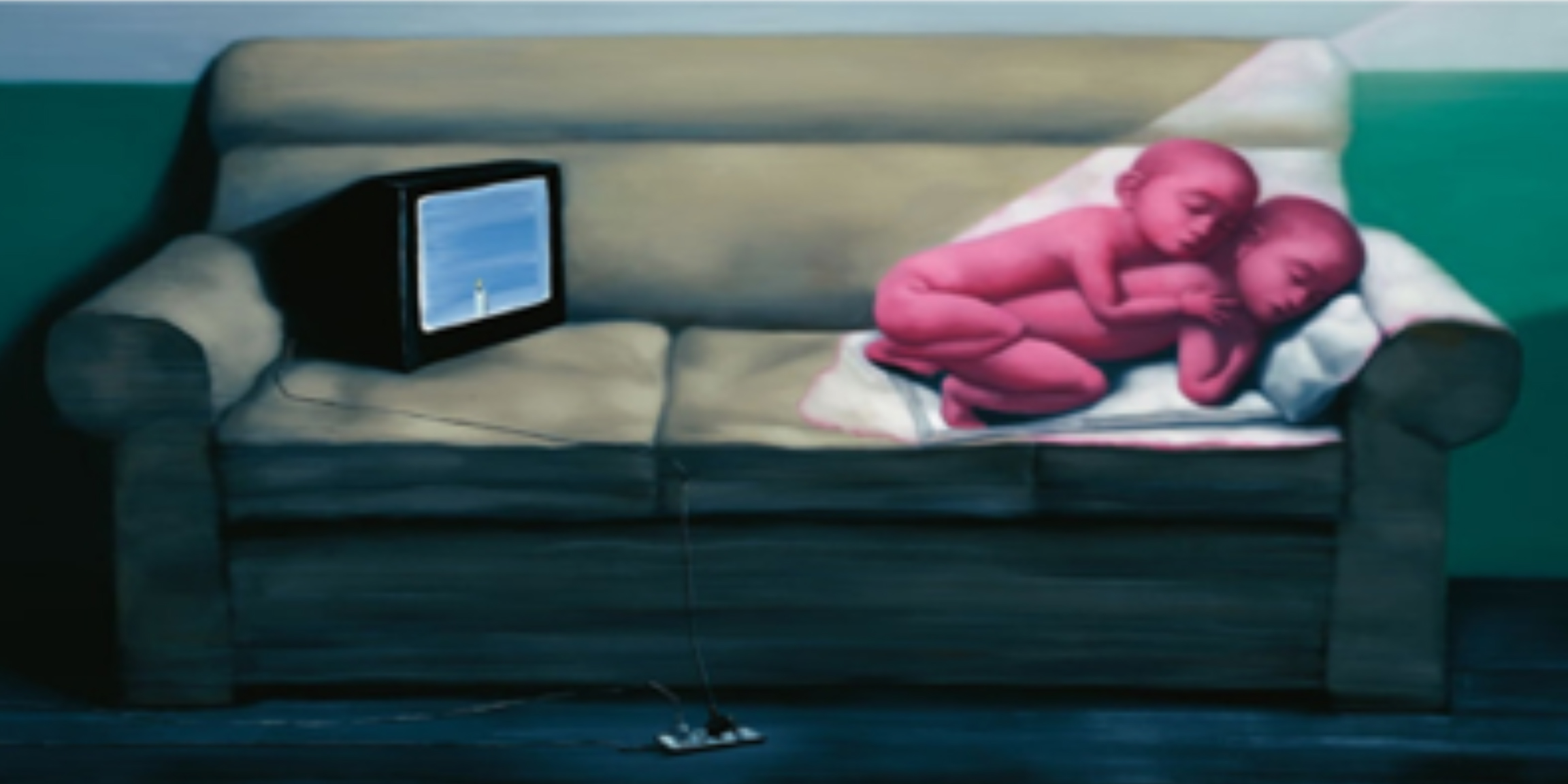
In this painting, Heaven No.3 which was produced in 2010, Xiao gang represents two young kids sleeping near each other, and one of them appear to be cuddling the other. This symbolizes Chinese collectivism which is a unique feature of this country. Chinese people are selfless, they rely on one another, and they also comfort each other when it is necessary. China is like one big family. Through this artwork, Xiao gang managed to communicate the socialist ideology which is widespread in the Chinese culture. Collectivism is characterized by firm societal frameworks which aid in distinguishing in-groups and out-groups. In a collective culture, people act in the interest of all members of society and not necessarily of themselves. Just like in this depiction, Xiao gang intended to convey that the Chinese people should look after each other.
The use of color in the Heaven NO.3 also conveys specific messages to the audiences. Colors are mainly categorized into warm and cold colors, and they create varying feelings. Xiaogang has made wise use of colors such as the red line in the Bloodline series. The red color may indicate blood, love, and strengths and Xiao gang has used it to symbolize strong connections between family members in this art. Additionally, the black color may represent sadness, remorse, anger, and sophistication. Xiao gang has used black colors in his paintings to express sadness and uncertainty.
Heaven No.3